How to Measure a Replacement Part for Custom 3D Printing
A practical measurement checklist for turning a broken or missing component into a printable replacement.
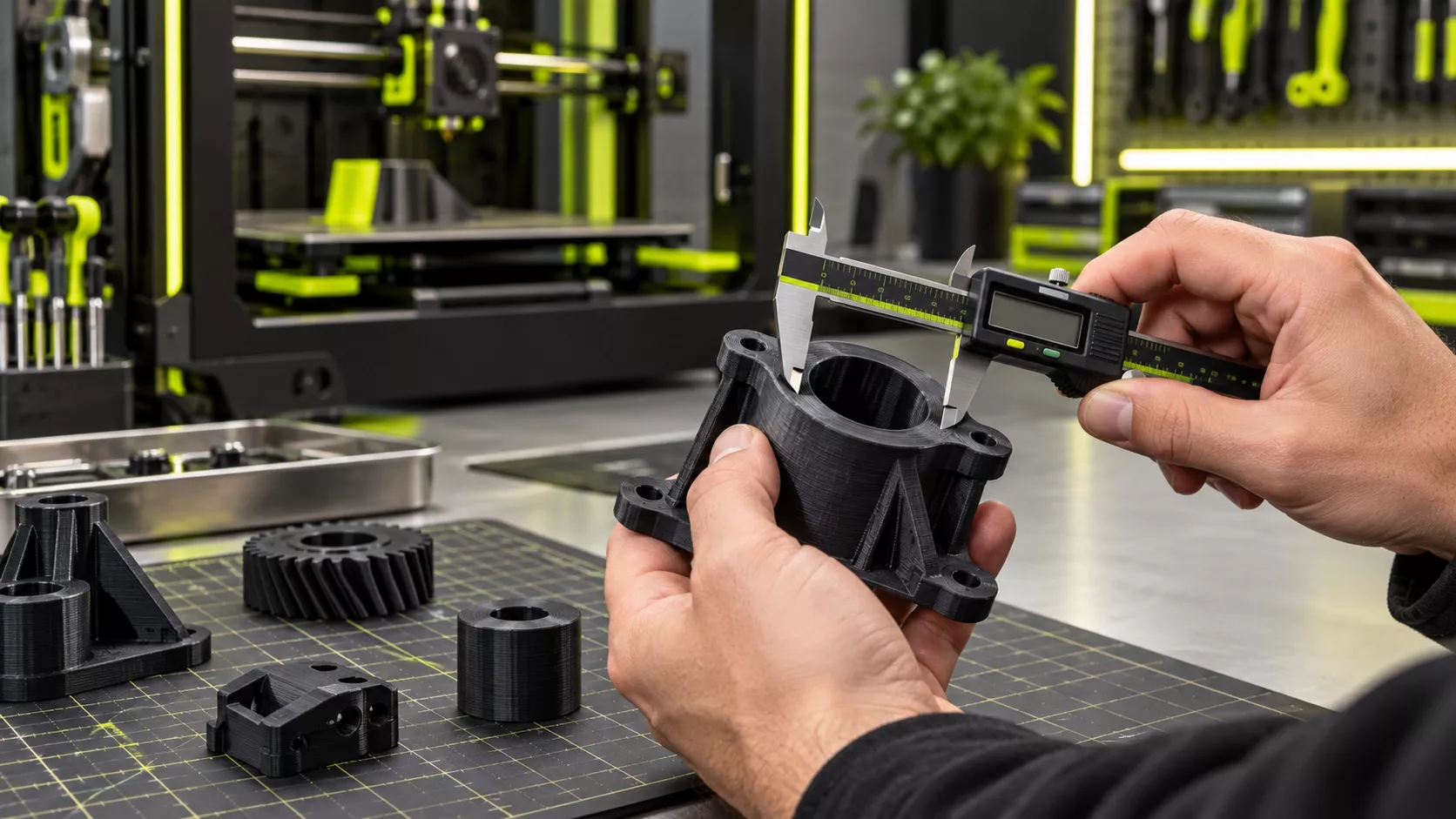
A small broken clip, spacer, bracket, or cover can sometimes keep a much larger item out of service. When an off-the-shelf replacement is unavailable, a custom 3D printed part may be an option. The most useful starting point is accurate measurements and a clear description of the part’s job.
Identify what the part must do
Before measuring, take photographs of the part installed, the area around it, and the surfaces where it connects. Explain whether the part slides, snaps, pivots, supports weight, or merely covers an opening. A broken part may not show its original dimensions, so photos of the mating assembly can be especially useful.
Measure the features that matter
Digital calipers help measure outside dimensions and smaller features. Record millimeters when possible, and include:
- Overall length, width, and height.
- Hole diameters and center-to-center spacing.
- Wall thicknesses and the depth of slots or recesses.
- The location of tabs, notches, hooks, and mounting surfaces.
- The orientation of the part relative to neighboring components.
Do not guess at a dimension you cannot reach. Mark it as unknown and provide a close-up photograph with a ruler for scale instead.
Check the fit and the environment
Tell us if the part will sit in a hot vehicle, outdoors, near moisture, or under repeated bending. Those details help determine whether PLA, PETG, ASA, or another material is appropriate. Also note whether the part needs a snug fit, a sliding fit, or clearance around a screw.
Share a simple sketch
A hand-drawn sketch can be enough to begin a conversation. Label each measurement, indicate which faces are important, and show where fasteners or neighboring parts touch the design. Several clear images are usually more helpful than one blurry photo.
Expect a test fit
When dimensions are uncertain, a quick prototype or a small fit-test section can reduce wasted material before the final version. Adjustment is a normal part of making one-off replacement components.
Know when 3D printing is not suitable
Some components should not be recreated without qualified engineering and testing. Examples can include safety-critical automotive parts, electrical protection components, and parts whose failure could cause injury. We review the proposed use before deciding whether desktop FDM printing is appropriate.
Have a part you would like us to evaluate? Request a custom 3D printing quote and include photos, measurements, and the intended use.
Have a project in mind?
From one-off practical parts to small-batch production, we'd love to hear what you're working on.